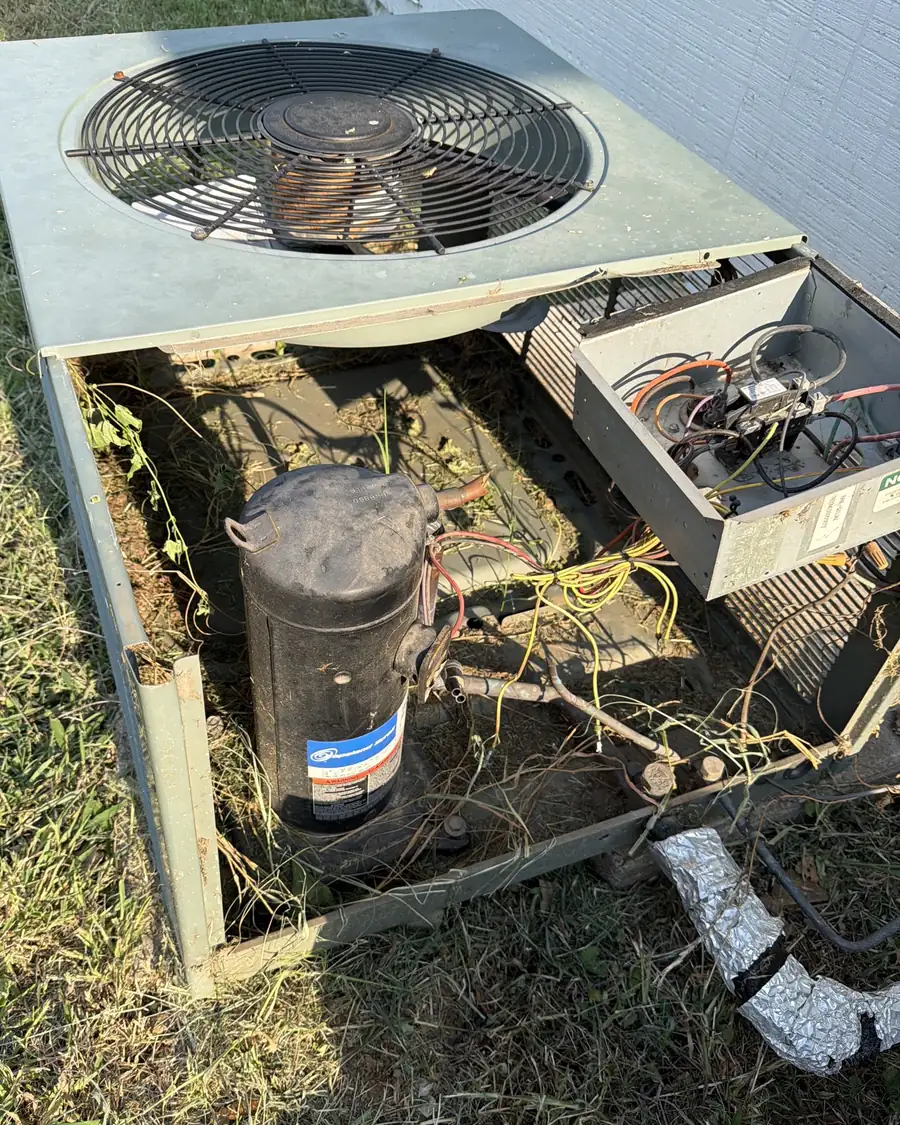

When your AC quits in July or the furnace won't light on the first cold night, the question comes fast: fix it, or put in a new one? A lot of companies answer that the same way every time. We don't, and the numbers below are why.
This guide walks through how our techs make the call on Tulsa-area systems: what they check, what a repair costs against what a replacement costs, and where the line usually falls.
Why we start from repair
Terry Dowd has run this company since 1995, and the habit hasn't changed: if a system can be fixed for a fair price and has years left in it, we fix it. That isn't charity. People who get an honest repair call us back, and when their system really is done, they trust us to replace it.
"We have called out bigger companies that wanted us to replace everything for commission. Dowd Heat and Air has been able to fix my AC and heater without replacing them..."
What a tech actually looks at
There's no single number that decides it. A tech weighs five things, and most of them you can check along with us.
1. How old it really is: the data plate
Every outdoor unit and furnace has a label with the model, serial number and, on most, a manufacture date marked "MFD" or "MFR DATE". That date matters more than the year you moved in, because systems often came with the house.
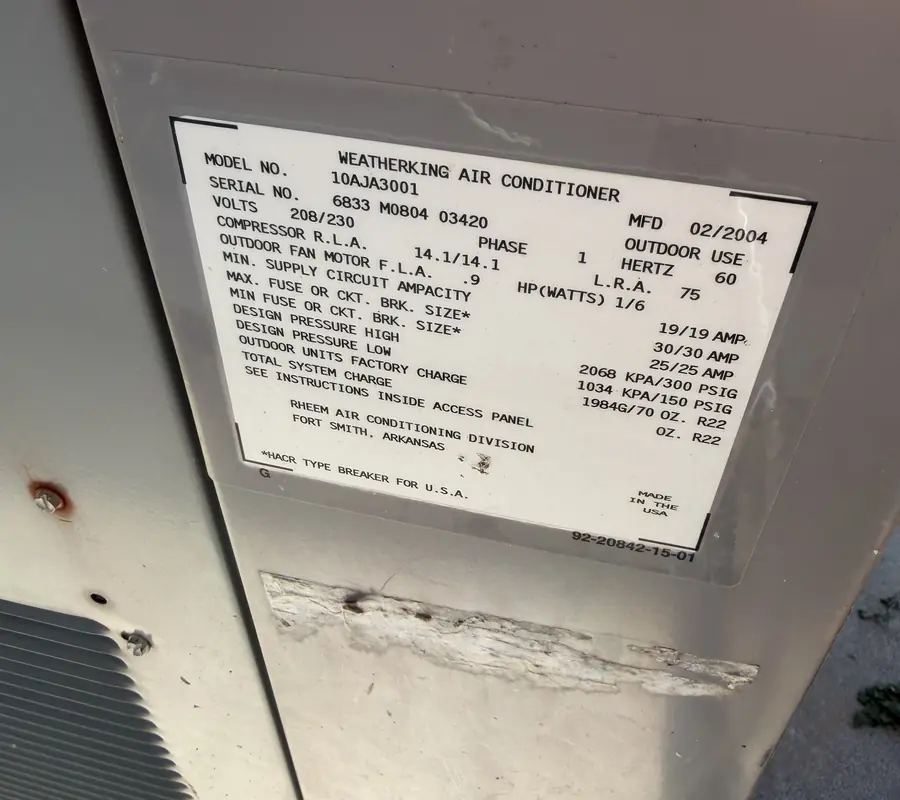
Age by itself doesn't condemn anything. It tells us how much life is probably left to protect with a repair. Our guide on how long AC, furnace and heat pump systems last in Oklahoma covers the typical ranges and how to read your own plate.
2. Which refrigerant it uses: R-22 or newer
Systems built before about 2010 mostly run on R-22. It hasn't been made in the U.S. since 2020, so any recharge comes from a shrinking supply of reclaimed refrigerant. An R-22 system that doesn't leak can keep running for years. One that needs refrigerant every summer is a different story.
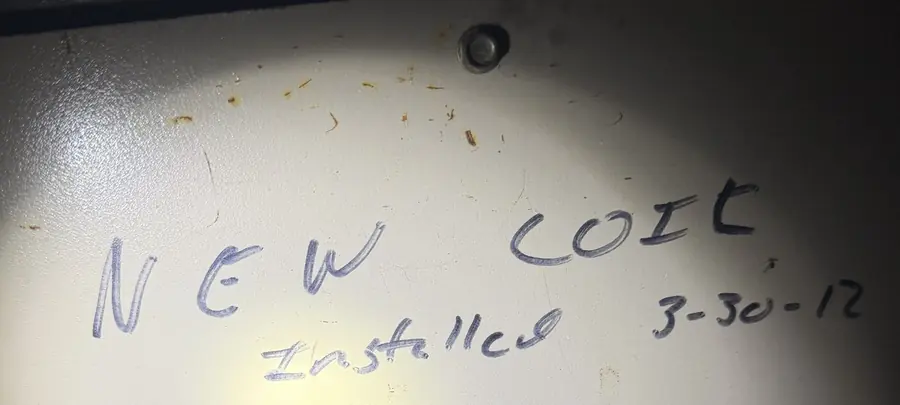
There's a second catch. The ACs we install today use newer refrigerants (R-454B on most of our recent Rheem installs), and a new outdoor unit can't simply be hooked to an old R-22 indoor coil. So "just replace the outside unit" usually means the coil too. Our R-22 guide explains your options in detail.
3. The heart of the system: compressor or heat exchanger
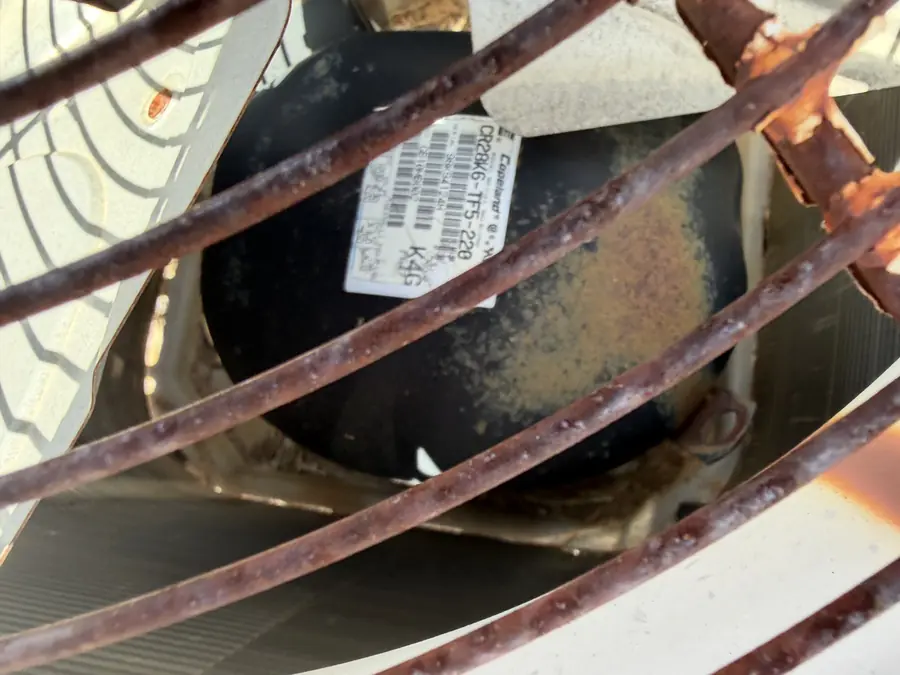
On an AC or heat pump, the compressor is the most expensive part. Grass, rust and years of Oklahoma summers wear on it, and when it fails on an older system, the repair price lands close to a new outdoor unit. On a newer system the math flips, because the manufacturer's parts warranty may cover the compressor.
On a gas furnace, the heart is the heat exchanger, the metal chamber that keeps flames and exhaust out of the air your blower pushes through the house. A crack or rust-through can let combustion gases, including carbon monoxide, into that air. On an older furnace, a failed heat exchanger is almost always a replacement, and the tech should show you exactly what they found.
If your system is 12 years or older and you just want to know where it stands before winter, ask the office about our safety check for older systems: a carbon monoxide test, a heat exchanger inspection and a short written report with photos that says fine, fix soon, or plan to replace. It's an inspection, not a tune-up.
4. What the repair costs against what replacing costs
This is where most decisions get made. A small part on a 16-year-old system is an easy yes. A compressor or coil on the same system is not, because you'd be spending real money on a machine with only a few years left.
Terry puts the tipping point plainly: when a 15 to 20 year old system needs a repair in the $2,500 to $3,000 range, most of our customers choose to replace instead. That's about a third of what most of our AC and furnace replacements cost in the last 12 months (between about $7,900 and $10,100). The full price table is further down.
"Dowd was excellent. They thoroughly inspected our system and communicated clearly. As a result of their expertise we saved $7,000 from a different company who was insisting we purchase a new HVAC unit."
5. How often it's needed help lately
One repair in ten years tells us very little. A pattern tells us a lot. When we look back through a system's history in our records, two things stand out: refrigerant added on two or more visits, which means it's leaking somewhere, and three or more repair calls in four years.
Our rule of thumb, the way we explain it
This isn't a law of physics, and every house is different. It's how we usually put it when we're standing in your driveway.
Usually fix it
The system is under about 12 years old, or the repair is a part rather than the heart: a capacitor, a contactor, a blower motor, an igniter, a control board, a drain line. Fix it and keep going.
Price both
The system is 12 to 15 years old and the repair is a big one, or it's needed several repairs lately. We'll give you the repair price and a replacement price side by side, and you decide.
Usually replace
It's 15 years or older and needs a compressor, a coil or a heat exchanger; it's an R-22 system with a leak; or the repair is heading toward a third of the replacement price. That's where most of our customers choose a new system.
A recommendation to replace a big part is worth a second look. In this second opinion in Jenks, another company had recommended a new evaporator coil, and the coil didn't need replacing.
One more thing that matters in Tulsa: timing. A furnace that limps through October may not make it through an ice storm in January. If the answer is "plan to replace", you'll usually do better choosing a system on a mild week than deciding in a hurry during a heat wave.
What replacing costs, from our own jobs
To weigh a repair, you need the other side of the scale. These are invoiced totals from the 125 systems we installed in the last 12 months: equipment, labor and materials, before any rebate. Not a sales range, and not a national average.
| What we replaced | Most came in between | Middle job |
|---|---|---|
| AC and gas furnace (64 installs) | $7,900 to $10,100 | $8,792 |
| AC and coil, furnace kept (18) | $5,100 to $8,000 | $6,624 |
| Electric heat pump system (9) | $8,700 to $14,000 | $13,040 |
| Dual fuel: heat pump plus gas furnace (7) | $10,600 to $14,300 | $11,165 |
| Package unit (5) | $8,600 to $9,500 | $8,872 |
| Gas furnace only (a handful) | $2,200 to $3,400 | $2,816 |
Source: our installs from October 22, 2025 to October 21, 2026. "Most came in between" is the middle half of jobs of that type. Invoiced totals for equipment, labor and materials, before rebates, checked October 2026. Your price depends on the house, so we quote in writing after a visit.
Notice the second row. Replacing the AC doesn't always mean replacing the furnace. If the furnace is sound, we can leave it and swap the AC and coil, which is how 18 of those 125 jobs went. Our Tulsa HVAC replacement cost page breaks these numbers down further.
Rebates can shift the math too. If you qualify, PSO pays $600, $1,000 or $1,400 on an ENERGY STAR heat pump, depending on its SEER2 rating. You need to be a PSO residential customer, the new system has to replace an existing one, and mobile and manufactured homes and apartments don't qualify. We check before we promise, and Dowd is on PSO's participating-contractor list. The details are on our PSO heat pump rebate page. The federal 25C tax credit for heat pumps ended on December 31, 2025. Payment options are available.
How we give you the answer
- 1
The tech finds the problem and tells you what it costs to fix. If it's a reasonable repair, that's the end of it.
- 2
If replacing looks smarter, they show you why: the data plate, the part that failed, photos of what they found.
- 3
If you want a replacement price, one of our technicians comes out, measures the house and puts the options in writing, usually good, better and best. There's no pressure to decide that day.
- 4
If you go ahead, the middle install in the last 12 months happened 3 days after the yes. Most systems we install carry 10-year parts and 2-year labor coverage.
"Prompt, polite, experienced, honest. Showed up when they said they would, did what they said they would do at a very fair price. Did not pressure or try to "sell" more than we needed or asked for."