
The short answer
- You don't have to replace a working R-22 system. No law makes you.
- New R-22 hasn't been produced or imported in the US since January 1, 2020. Repairs now use recovered or reclaimed R-22, which costs far more than refrigerant for a modern system.
- Most R-22 systems can't be switched to a modern refrigerant without replacing the main parts anyway.
- A leak on an R-22 system is the moment to put a replacement price next to the repair price.
How to tell if your AC uses R-22
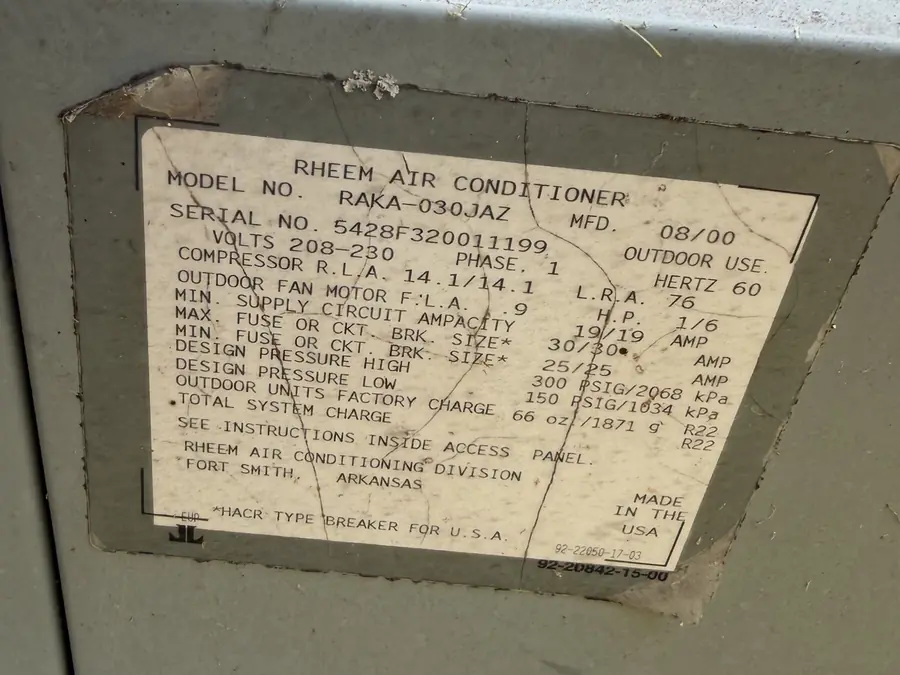
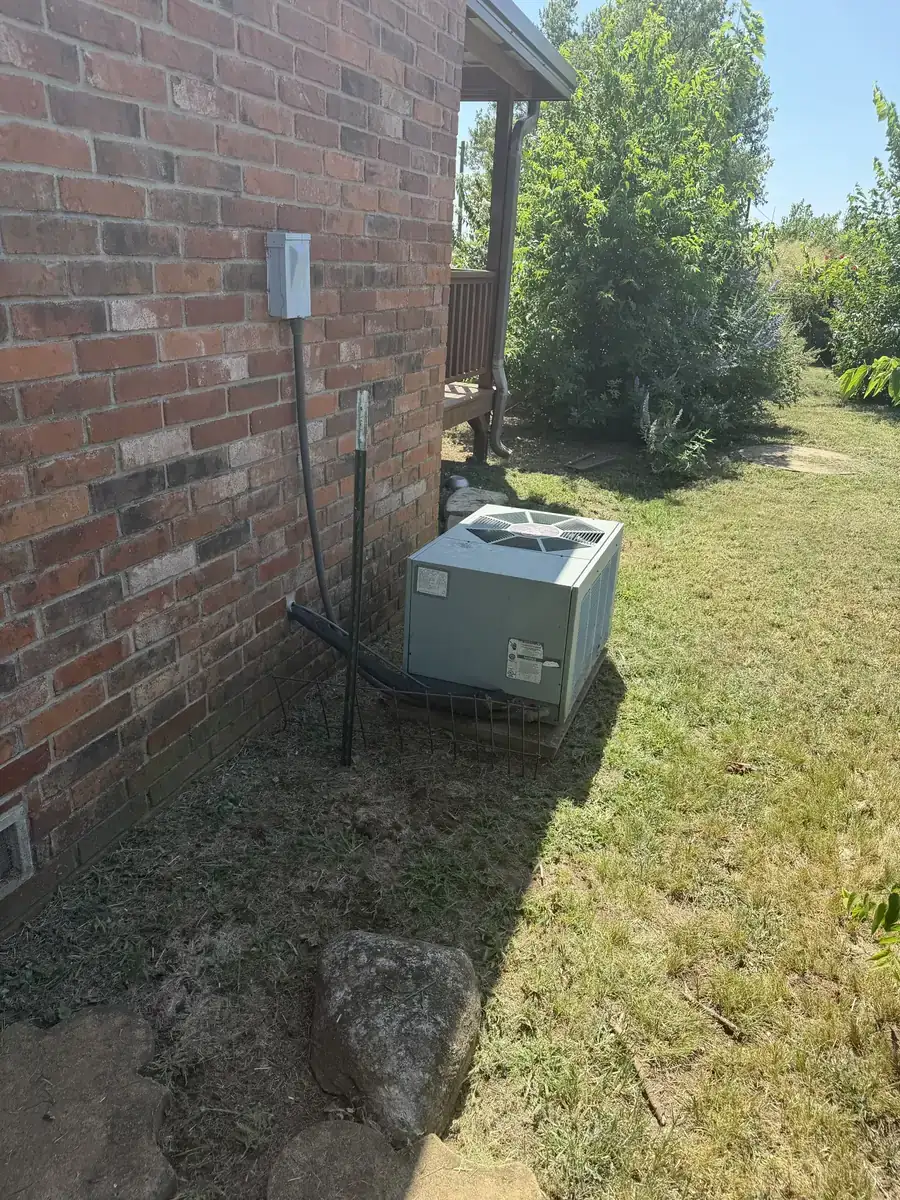
Walk out to the outdoor unit and find the metal or paper data plate, usually on a side panel near the electrical connections. You're looking for three things:
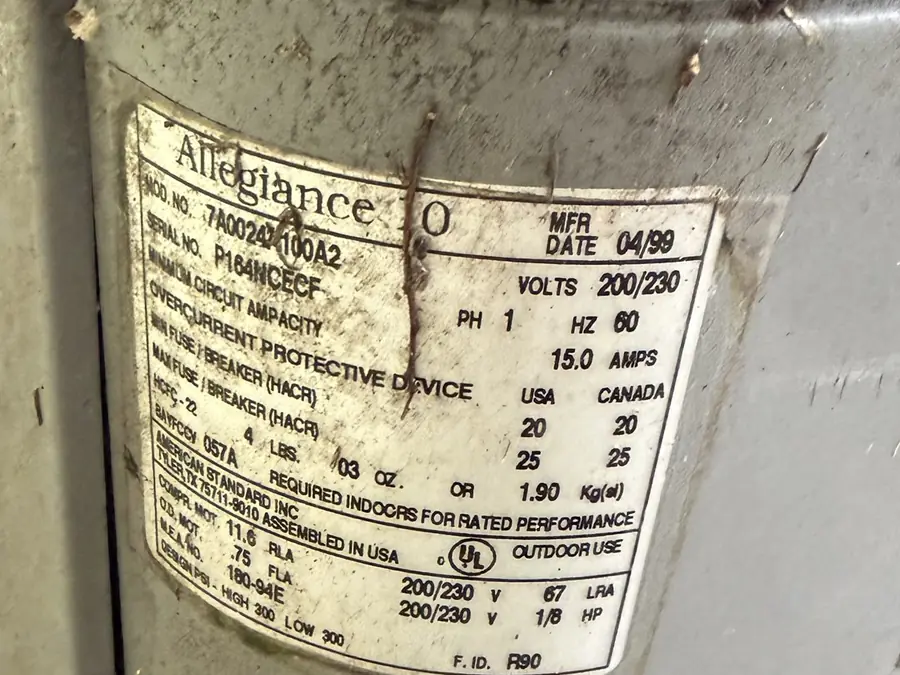
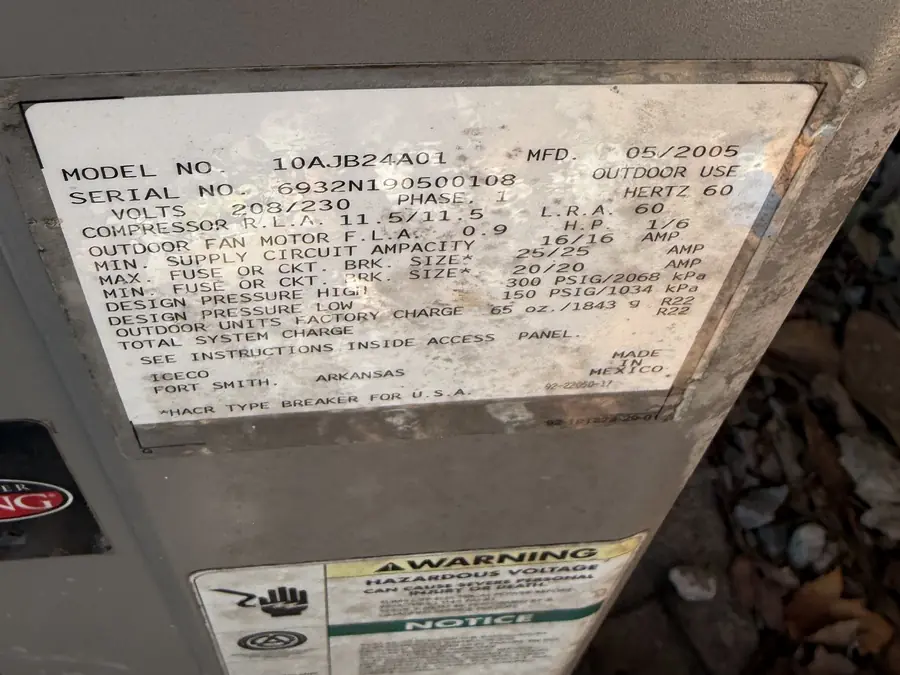
- The refrigerant. "R-22", "R22", "HCFC-22" or "Refrigerant 22", often at the end of the factory charge line.
- The manufacture date. Most central ACs built before 2010 used R-22. Units from the late 2000s can go either way, so check the label rather than the date alone.
- A pink R-410A sticker. If you see one, your system is not R-22. Systems from about 2010 on mostly use R-410A, and most of the ACs we've installed this year use the newer R-454B.
The plates fade in Oklahoma sun. If yours is unreadable, take a photo anyway and send it with the form below, or ask the tech at your next tune-up. It takes a minute to check.
What the phase-out actually says
R-22 (its chemical name is HCFC-22) damages the ozone layer, so the EPA phased it out under the Clean Air Act. The last step came on January 1, 2020: since then, no new R-22 can be produced in or imported into the United States.
What the rule does not do matters just as much:
- It doesn't make you replace your system. The EPA says there is no requirement to get a new system or convert an existing R-22 unit.
- It doesn't stop repairs. Existing systems can still be serviced with recycled, reclaimed or previously produced R-22.
- It does mean the supply only shrinks from here. Every pound used on a repair comes from refrigerant recovered out of old equipment and cleaned up for reuse.
One warning from the EPA worth repeating: propane and other unapproved refrigerants are a safety hazard in home air conditioners. If anyone offers a cheap "R-22 substitute" from an unmarked tank, say no.
When an R-22 system leaks
An air conditioner doesn't use up refrigerant. If it's low, it's leaking. On an R-22 system that leaves you with three costs to weigh:
- Finding the leak. Common spots on older systems are the indoor coil, the outdoor coil and the joints and valves in between.
- Fixing it. Some leaks are a quick repair. A leaking coil is a bigger job, and on an R-22 system the replacement coil still has to work with R-22.
- Recharging it. Reclaimed R-22 costs far more per pound than the refrigerant in a modern system, and the price moves with supply. A system like the 2000 Rheem above was charged with more than four pounds from the factory.
We don't publish a per-pound price for R-22 because it changes with what our supplier has. What we do is tell you, before we add anything, where the leak is, what fixing it costs and what the recharge costs, so you can compare that total with a replacement.
The pattern to watch for is refrigerant added year after year. When we sorted our records this fall, refrigerant added on two or more visits was one of the signs we flagged, because a system that keeps losing refrigerant almost always keeps leaking. Paying for R-22 every summer is the most expensive way to own an old AC.
Why you can't just "convert" most systems
It sounds simple: drain the R-22 and fill it with something modern. In practice it rarely works out, for three reasons.
R-410A runs at much higher pressure
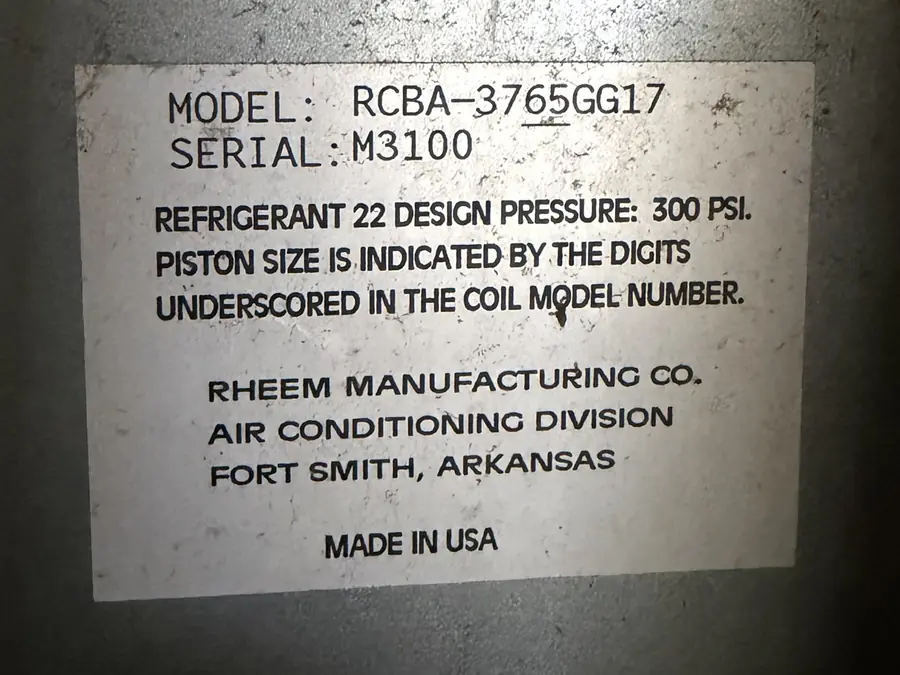
You can see it on the plates. The R-22 units in this guide list a high-side design pressure of 300 psig. A 2009 R-410A unit we photographed at an estimate visit this summer lists 550 psig. R-22 compressors, coils and valves weren't built for that, and R-410A systems use a different oil too. Putting R-410A in R-22 equipment is not an option.
The indoor coil is part of the system
The coil sitting on top of your furnace (or inside the air handler) carries the same refrigerant as the outdoor unit. A new AC is designed and rated as a matched pair with its coil, so when an R-22 AC is replaced, the coil goes too. Your furnace can often stay if it's sound.
Retrofit refrigerants exist, with a catch
The EPA has approved some other refrigerants for retrofitting R-22 systems. It also says they won't work well without changes to system components. On an AC that's already 15 to 25 years old, you'd be paying for labor and parts to keep the oldest equipment in your house going. For most of the homes we see, that money goes further toward a new system.
Your options, and what they cost in Tulsa
An R-22 system isn't an emergency by itself. These are the honest choices, roughly in order of cost:
- 1
Keep it running
If it cools well and isn't leaking, keep it maintained and start a replacement fund. Old doesn't automatically mean replace.
- 2
Fix one leak, then plan
A single small leak that can be found and repaired is often worth fixing. Use the time it buys to price a replacement without pressure.
- 3
Replace the AC and coil, keep the furnace
When the furnace is in good shape, this is the lowest-cost way off R-22.
- 4
Replace the whole system
If the furnace is the same age, doing both at once usually costs less than two separate jobs a few years apart. A heat pump or dual fuel system is worth a look here, especially if you're a PSO customer.
| What we replaced | Installs | Most came in between | Median |
|---|---|---|---|
| AC and coil only (furnace kept) | 18 | $5,100 to $8,000 | $6,624 |
| AC and gas furnace | 64 | $7,900 to $10,100 | $8,792 |
| Dual fuel (heat pump and gas furnace) | 7 | $10,600 to $14,300 | $11,165 |
| Heat pump system (electric) | 9 | $8,700 to $14,000 | $13,040 |
Source: Dowd's installs from October 22, 2025 to October 21, 2026. Invoiced totals for equipment, labor and materials, before any rebate; "most came in between" is the middle half, rounded to the nearest $100. Checked October 2026. Your price depends on your house, so we quote in writing after a visit.
If you're a PSO residential customer and choose a qualifying ENERGY STAR heat pump, PSO pays $600, $1,000 or $1,400 depending on its efficiency, if you qualify. We check before we promise. The federal tax credit ended for systems installed after December 31, 2025, so ignore ads that still mention it. More on what a replacement costs in Tulsa and how the PSO heat pump rebate works.
"Contacted 3 companies; Dowd showed up Same Day. Brian was knowledgeable, transparent, and had the blower replacement finished within an hour. Although my system is a 26-yr-old Trane, he had all the parts required to repair it."
How we'd handle your R-22 system
We start the same way every time: find out what's actually wrong. If it's a capacitor or a blower motor, we fix it, R-22 or not. If it's a leak, we show you where it is and give you two numbers: the repair and recharge, and a written replacement price. Then you decide. One of our technicians puts the replacement options in writing.
Not sure whether it's time? Our guide to repairing or replacing an HVAC system walks through the decision, and how long HVAC systems last in Oklahoma covers what to expect from an older unit.
Sources (checked October 22, 2026): US EPA, Purchasing and Repairing Home Air-Conditioners or Heat Pumps; US EPA, Residential Air Conditioning and the Phaseout of HCFC-22: What You Need to Know. Prices and counts: Dowd Heat and Air's own records.