
The short answer
- A mini-split is a small heat pump with its own indoor head. It heats and cools one space without touching your ductwork.
- Garages need more capacity than their size suggests. The door and the insulation matter most.
- The outdoor unit, the electrical and the route for the lines decide as much of the price as the unit does.
- Most of the mini-splits we installed in the last 12 months came in between $3,800 and $5,400. See our prices.
Garages, shops and garage apartments
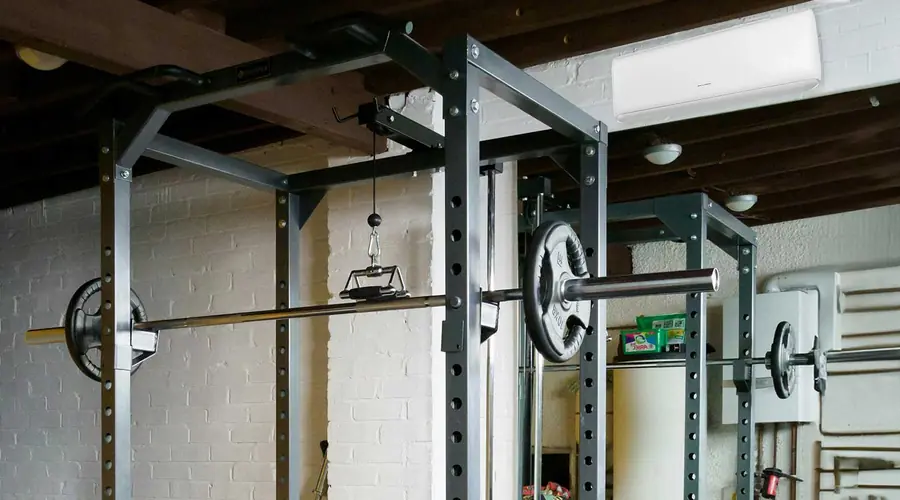
Garages are one of the most common places we install mini-splits, and they're easy to undersize. A garage loses and gains heat in ways a bedroom doesn't:
- The door. A big uninsulated garage door is a thin metal wall, and the gaps around it leak air. An insulated door, or an insulation kit plus new weatherstripping, is the single best thing you can do before adding a unit.
- The walls and ceiling. Many Tulsa garages have bare studs or an uninsulated ceiling under a roof that bakes in July. A finished, insulated garage can use a smaller unit.
- How you use it. A shop where the door is up half the day needs a different plan than an office or gym where it stays shut. No unit can cool a garage with the door open.
- Dust. In a woodshop or a garage gym, plan to rinse the indoor filters more often.
A garage apartment is closer to a small house. It's usually finished and insulated, and it may need one head for the living space and another for the bedroom if a wall blocks the airflow. One of our customers keeps hers on the same maintenance visit as the main house:
"I just had my Home HVAC serviced as well as the Garage apartment mini split..."
Additions, bonus rooms and sunrooms
The first idea is usually to cut in a new duct from the existing system. Sometimes that works. Often it doesn't, for two reasons. Your system was sized for the house it was installed in, not the house plus a new room, so the extra room borrows air from everywhere else. And the addition is usually at the far end of the duct run, where air arrives weakest.
A mini-split sidesteps both problems: the new room gets its own heating and cooling, with its own thermostat. A few room types we see often:
- Bonus rooms over the garage. Hot from the roof above and the garage below, and often last on the duct line.
- Sunrooms and enclosed porches. All that glass gains heat fast in summer and loses it fast in winter, so size matters here.
- Finished attics and converted rooms. Usually no ductwork at all.
If several rooms need help, one outdoor unit can run two or more indoor heads, each with its own temperature. That's the three-head system in our records above. If the whole house is struggling and the ductwork is sound, though, fixing or replacing the central system usually costs less per room. Our guide to repairing or replacing an HVAC system covers that decision.
Home offices and the one room that won't cool
If you work from home, a mini-split lets you keep one room comfortable all day without running the whole house's system for it. It's also the fix for the room with the computers in it: the server room in our records needed cooling year-round, and because there was no easy way to drain it downhill, it got a small condensate pump.
Before adding a unit to a room that's always hot, it's worth having the central system checked. A crushed duct or a closed damper can look like a problem a mini-split would solve. If the room is simply too far from the system or gets too much afternoon sun, a mini-split is the clean answer.
"Had them finish an install of my mini split in my office, they did a very clean install and they were very friendly and professional."
Where the outdoor unit goes
Where the outdoor unit sits shapes the whole install:
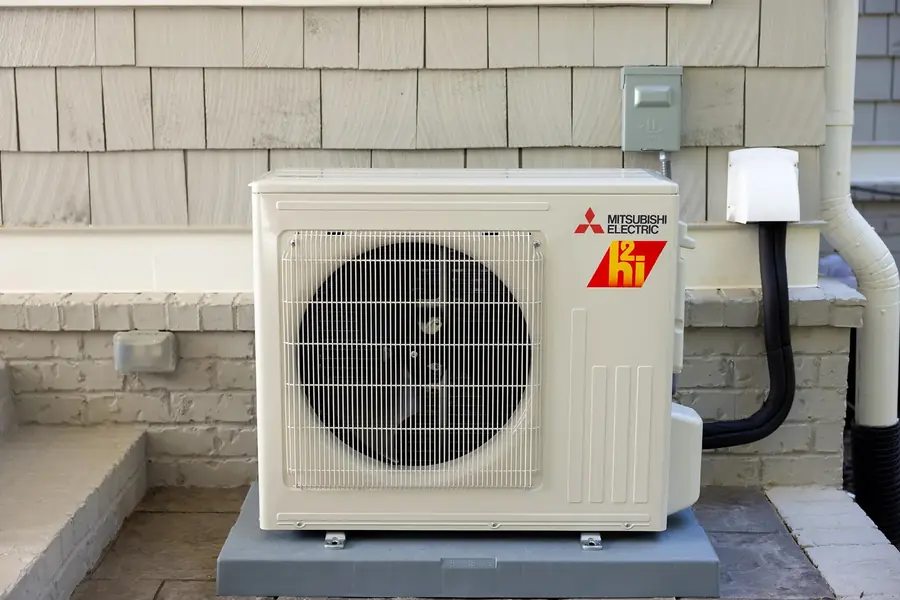
- Pad or wall bracket. Most sit on a pad on the ground. A wall bracket lifts it off the ground where space is tight or there's no level spot.
- Close to the head. The shorter the run of copper lines between the indoor head and the outdoor unit, the simpler and less costly the job. Long runs are possible; they just cost more.
- Room to breathe. Keep shrubs, fences and stored stuff back from it, and keep it out from under a roof edge that dumps water or ice.
- Mind the neighbors. It's quiet, but a spot away from a bedroom window or the neighbor's patio is better.
- A path for the drain. The indoor head makes condensation that has to run downhill to the outside, or go to a small pump.
Electrical and line-set covers
Electrical
Every mini-split needs its own circuit from your panel and a disconnect switch outside by the unit. Most of what we install runs on 230 volts; we've also installed a small Gree model that runs on 115. Garages are often fed by a single shared circuit, and older homes may have a full panel, so the electrical can be a real part of the cost. Ask whether a quote includes it: some of ours do, and the install-only job in our records ($2,484 for two heads with line-set covers and a pad) did not.
Line-set covers
Three things come out through the wall behind the indoor head: the copper refrigerant lines, the drain line and a control wire. On the outside they run down the wall to the unit. A line-set cover (we've used Hide-A-Line) is a paintable channel that hides all of it. It's optional, but it looks much better on the front or side of a house and keeps the sun off the pipe insulation, which breaks down in Oklahoma summers.
What it costs
Most of the mini-split installs we did in the last 12 months came in between $3,800 and $5,400, with a middle job around $4,600. That's the invoiced total for equipment, labor and materials, before any rebate, checked October 2026. Larger rooms, more heads, cold-climate models and long line-set runs cost more; your price depends on the space, so we quote in writing after a visit.
Prices and brands
See every price from our mini-split jobs
The full table, from single rooms to Hyper Heat and three-head systems, plus the Gree and Mitsubishi models we install.
Mini-Split Installation in TulsaEvery mini-split we install is a heat pump, so PSO's heat pump rebate may apply if you're a PSO residential customer, the unit qualifies and it replaces existing equipment. The 2023 Mitsubishi in our records got $800 from PSO. We check before we promise, and the federal tax credit ended on December 31, 2025. More on the PSO heat pump rebate, and if you're weighing a heat pump for the whole house, read heat pump vs gas furnace in Tulsa.
Sources: job details, prices and counts from Dowd Heat and Air's own records (20 mini-split jobs, November 2022 to August 2026), checked October 2026. Reviews quoted verbatim from Dowd's Google reviews.